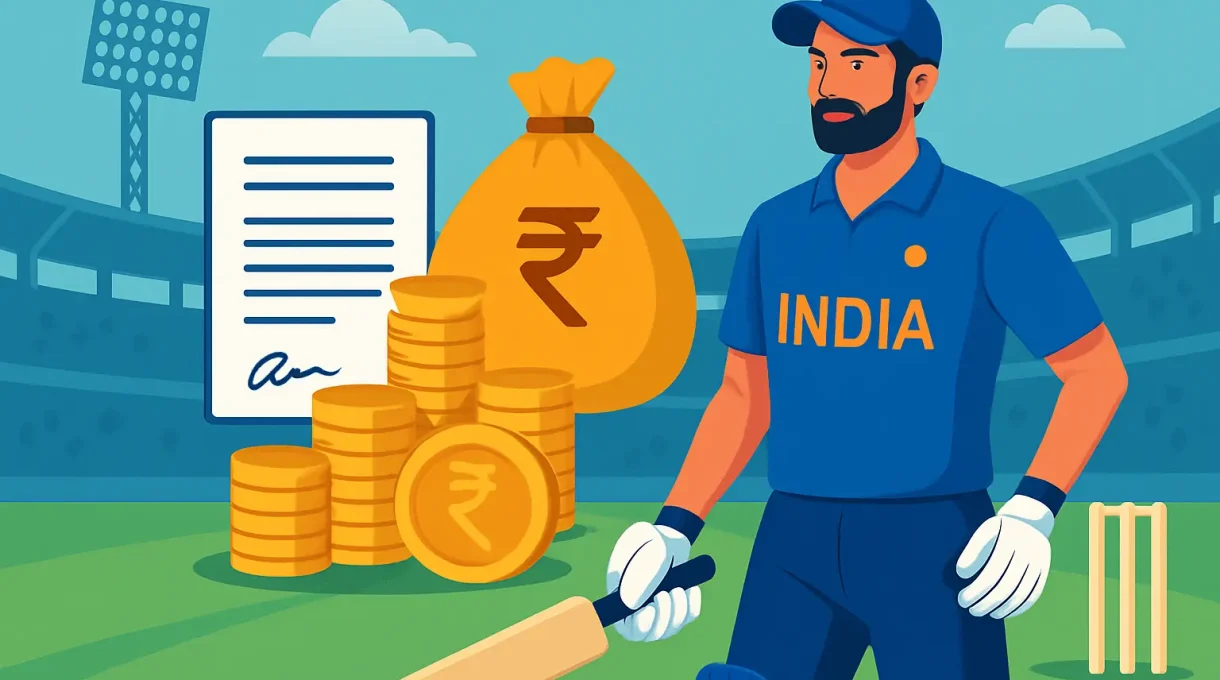
Walk into an Indian team dressing room on the morning of a Test and you’ll notice two very different rhythms. One is cricket as craft: a senior fast bowler micromanaging his spikes and tape, a batter repeating a last shadow-drive, a wicketkeeper stretching in a corner. The second rhythm is cricket as profession: the logistics officer double-checking per diems and rooming lists, a manager confirming appearance schedules, support staff ticking through allowances, insurances, and paperwork. That second rhythm rarely makes television. But it is the spine of the modern cricketer’s livelihood.
Indian cricket player salary is not a single figure. It is a layered ecosystem built by the BCCI’s central contracts, international match fees, bonuses, allowances, prize money, and—beyond the board—domestic cricket earnings, the IPL, and endorsements. This guide unpacks that ecosystem as it actually works, with the precision fans, aspiring professionals, and even state-level administrators look for but seldom find compressed in one place.
Summary at a glance
- Centrally contracted India players earn an annual retainer based on grade (A+, A, B, C) plus per‑match fees for Tests, ODIs, and T20Is. Only the playing XI receives a match fee.
- Domestic cricketers earn per match across Ranji Trophy and other tournaments, with playing XI and non‑playing squad rates defined by BCCI circulars and topped up by state associations.
- India Women receive the same international match fee per format as the men; their central contract retainers are in three grades (A, B, C).
Current BCCI retainers and international match fees
BCCI central contracts (Men) — grade-wise Indian cricketer salary chart
- Grade A+: INR 7 crore annual retainer
- Grade A: INR 5 crore annual retainer
- Grade B: INR 3 crore annual retainer
- Grade C: INR 1 crore annual retainer
India international match fees (Men and Women)
- Test: INR 15 lakh per match (playing XI)
- ODI: INR 6 lakh per match (playing XI)
- T20I: INR 3 lakh per match (playing XI)
Women’s central contracts
- Grade A: INR 50 lakh annual retainer
- Grade B: INR 30 lakh annual retainer
- Grade C: INR 10 lakh annual retainer
These figures form the non‑negotiable base of an international Indian cricketer’s earnings. Everything else—bonuses, per diems, domestic salaries, IPL contracts, endorsements—stacks on top.
How BCCI central contracts actually work
Central contracts are the BCCI’s way of saying: you are in our long‑term plans and we will pay you to stay ready for India. The grades reflect two things: your current role across formats and your expected availability. The A+ pool is reserved for all‑format pillars—names like Rohit Sharma, Virat Kohli, and Jasprit Bumrah have occupied this space—players who define series, put bums on seats, and anchor the team’s day‑to‑day competitiveness in Tests, ODIs, and T20Is. The A bracket typically contains senior multi‑format pros and those who dance between formats with impact; B holds consistent one‑format locks and multi‑format contenders; C is the pathway for newer caps, backup keepers, utility all‑rounders, and specialists who might be on the fringe of one format but in clear sight of selectors.
Key mechanics insiders watch
- Grade definitions are not purely statistical. Selection meetings balance role coverage (e.g., a left‑arm spinner in the pool), squad stability, and injury histories. An opener averaging less than a middle‑order star can still sit higher if his role scarcity is real.
- Movement between grades tends to lag form by a selection cycle. The board wants to avoid knee‑jerk swings; conversely, it also avoids “dead spots” where a player is over‑rewarded for past returns.
- An injury while on India duty does not crater your retainer. NCA‑managed rehabilitation retains core earnings, and match‑fee losses can be offset through insurance if the injury meets policy thresholds.
- A specialist fast‑bowling contract exists outside the four senior grades. Fast bowlers in the wider national pool—often with high NCA touchpoints—receive a separate retainer structure to safeguard development and workloads. This doesn’t replace a central deal; it’s a bridge to one or support around it.
What “selection criteria” looks like in practice
- Volume and value of minutes: how many overs you bowl or balls you face in a cycle across formats.
- Role scarcity: left‑arm seam, wrist‑spin, left‑hand top‑order, finisher with pace‑hitting range—roles that shape balance get weighted.
- Fitness trust: yo‑yo benchmarks are hygiene; day‑in, day‑out trust is about durability, rehab adherence, and workload honesty.
- Big‑day delivery: knockout or marquee performances often tip the scales, especially for A and A+ conversations.
India match fees, bonuses and allowances
Match fees are paid only to the playing XI. The numbers are simple and public: INR 15 lakh for a Test, INR 6 lakh for an ODI, INR 3 lakh for a T20I. That simplicity hides layers of nuance.
- Reserve players: those not in the XI don’t draw a match fee. Their earnings for the day are per diem, allowances, and—if applicable—appearance fees tied to commercial obligations.
- Per diems and daily allowances: on away tours, per diem rates are pegged in foreign currency and are generous by sporting standards. On home assignments, daily allowances are in rupees. These cover meals, incidentals, and day‑to‑day living costs. While the exact numbers are not formally public, figures in circulation among players and agents peg foreign tour per diems in the mid‑three figures in dollars and home allowances in the mid‑four figures in rupees.
- Business class travel and five‑star accommodation: travel and lodging are outside salary but a real part of compensation. Full business class on long hauls, premium rooms, and single occupancy are standard at the top.
- Equipment and kit: custom bats and gloves are often sponsored, but team kit and training gear fall under BCCI provision. Players receive multiple sets per series; support staff manage replacements.
- Medical, insurance, and rehab: NCA‑managed rehab covers travel, stay, and specialist care. A central group insurance policy covers severe injury contingencies. The board’s medical ecosystem is one reason senior pros trust returns to play.
- Bonuses: the board announces team bonuses after landmark wins—series in tough away conditions, ICC events, Asia titles. These are separate cheques, distributed across playing and support groups, with split percentages agreed internally. Man‑of‑the‑match and man‑of‑the‑series prizes, sponsored by series partners, add discretionary earnings on the night.
Women’s salaries and pay parity on match fees
The single most consequential administrative decision for the women’s game in India has been match‑fee parity at international level. Today, a woman representing India draws the same per‑match fee as a man: INR 15 lakh for a Test, INR 6 lakh for an ODI, INR 3 lakh for a T20I. That anchor has changed conversations in dressing rooms; it dignifies time spent on national duty at the same economic value.
Central contracts for Women are in three grades: A at INR 50 lakh, B at INR 30 lakh, and C at INR 10 lakh. While the retainer scale is lower than the men’s pool, the parity in match fees stabilizes take‑home for those who play most of India’s fixtures in a cycle. Add the women’s domestic calendar and the WPL, and the best‑managed careers in the women’s setup now have diversified, stable earnings with ceiling‑raising potential.
A practical example:
A frontline India Women quick with a Grade A retainer who plays a full marquee series, a multi‑format all‑format series at home, and a handful of T20Is in an away window can rack up match‑fee totals that outstrip the retainer itself. That would have felt unthinkable not long ago.
Domestic cricket salary in India: Ranji, Vijay Hazare, Syed Mushtaq Ali, Duleep, Irani
Ask a senior pro who grinds ten months a year for his state what kept him going before the central contracts era, and he’ll point to one word: match fees. The domestic circuit is where thousands of professional careers are made, sustained, and retired. The pay structure is clearer today than it has ever been.
Current BCCI‑notified match fees (Men’s domestic)
- Ranji Trophy (four‑ or five‑day first‑class): INR 40,000 per day for playing XI. A full match generally pays INR 1,60,000 for a four‑day game; if a fifth day is played, that day is paid as well. Non‑playing squad members are typically paid 50 percent of the playing‑XI fee.
- Vijay Hazare Trophy (List A): INR 36,000 per match for playing XI. Non‑playing squad: 50 percent.
- Syed Mushtaq Ali Trophy (T20): INR 26,000 per match for playing XI. Non‑playing squad: 50 percent.
- Duleep Trophy and Irani Cup (first‑class; zonal and Rest of India fixtures): the per‑day rate mirrors Ranji, with add‑ons for finals and winners that come from tournament prize pools.
- Deodhar Trophy (List A, inter‑zonal): match fees align with Vijay Hazare scale.
Allowances and add‑ons at domestic level
- Daily allowance: paid by BCCI during tournaments, over and above match fee. Home associations often top this up.
- Travel and lodging: centrally arranged for BCCI tournaments; quality can vary for early rounds hosted by smaller associations but has steadily trended upward.
- State association top‑ups: richer associations add retainers, employment, or win bonuses. Players at historically well‑funded units—Mumbai, Karnataka, Tamil Nadu, Saurashtra—often report better off‑season retainers or job pathways through state or PSU partners.
- Knockout bonuses and awards: player of the match or series cheques from sponsors, association cash awards for titles, and per‑day training camp stipends.
Domestic earnings compound quickly for regulars. A batter playing the full league stage of Ranji (eight or nine games including fifth‑day finishes), plus Vijay Hazare and SMAT, can earn a low‑to‑mid seven‑figure rupee sum in match fees alone, before any state top‑ups. Seniority used to influence slabs; the current structure focuses squarely on playing‑XI participation, a shift welcomed by younger pros who break in early.
India A, U23, and U19 payments
The India A ecosystem is semi‑international. Players receive match fees pegged to the senior domestic rates alongside international‑tour per diems and travel class upgrades. India A stints add importantly to annual income for non‑centrally contracted players and those sitting in Grade C. U23 and U19 match fees are standardized across multi‑day and limited‑overs domestic competitions at lower slabs than senior men, with clear increments awarded on graduation. The highest‑value benefit here is not cash—it is visibility. A strong A tour often flips a contract conversation in your favor months later.
IPL vs BCCI salary comparison: where the big money lives
The shortest conversation in cricket finance is the one that asks which pays more, BCCI or IPL. For a handful of stars, endorsements dwarf both. For the larger cohort of Indian pros, the IPL overwhelms everything else.
- Central contract math: a Grade A+ India player starts with INR 7 crore. Add typical annual match fees for a busy all‑format player—one full Test season, a busy ODI lineup, healthy T20I involvement—and you might tack on INR 2–3 crore. A Grade A season can sit in the high single‑crore to low double‑crore range. Series‑win bonuses push that up.
- IPL math: a solid first‑choice Indian cricketer can command eight‑figure rupee deals with franchises. Star all‑rounders, top‑order batters, and Indian quicks who bowl in pressure overs leap higher. That is before man‑of‑the‑match awards and playoff bonuses franchises often declare internally.
The important reality: BCCI money is certain and calendar‑proof. The IPL is market‑exposed but life‑changing. A sensible career plan for a top domestic or fringe‑India player balances them: maximize IPL without compromising what selectors call “red‑ball fitness and trust,” keep your domestic engine honest for winters when the IPL auction goes cold, and value the surety of a central retainer once you break in.
Taxes and take‑home: what actually lands in the bank
Indian cricketers are not BCCI employees in the classic sense; the retainer and match fees are treated as professional income. That means tax planning looks more like a consultant’s than a salaried officer’s.
How tax typically works
- TDS: both BCCI and IPL franchises deduct tax at source on payments categorized as professional fees. That deduction is not your final tax; it is a prepayment. You settle the difference—if any—when you file returns.
- Slab rates, surcharge, and cess: top‑tier earners sit in the highest slab and attract surcharge brackets. Effective rates can climb meaningfully above the base slab when income crosses thresholds. Choosing between old and new regimes is a function of deductions, investments, and housing choices.
- Expenses: because income is professional, legitimate business expenses—coaching consultants, physio work outside BCCI structures, training equipment, agent commissions, and travel not reimbursed by BCCI—are often claimed. Documentation must be meticulous.
- State duties: match fees for games in certain states may trigger specific withholding rules; teams and agents plan for these when mapping out cash flows across a season.
Sample take‑home illustrations
- Grade A+ anchor season: a marquee batter pockets INR 7 crore in retainer. He plays eight Tests (INR 1.20 crore), twelve ODIs (INR 72 lakh), and ten T20Is (INR 30 lakh). Gross BCCI income: INR 9.22 crore. Assume modest series‑win bonuses adding INR 50 lakh. Total gross: INR 9.72 crore. TDS has been deducted across payments. He files with professional expense claims—training support, private physio blocks in the off‑season, an agent retainer. After slab rate, surcharge, and cess, an illustrative effective tax bite sits a little above one‑third of gross. His net from BCCI could settle around INR 6.2–6.4 crore, before endorsements and IPL.
- Grade C breakout: a quick makes India in white‑ball formats late in the cycle. Retainer INR 1 crore; fifteen T20Is and six ODIs add INR 72 lakh. Gross: INR 1.72 crore. Without meaningful deductions, effective tax eats into the upper third. Net: a little over INR 1.1 crore. The difference endorsements and IPL make to a life like this is immediate and transformative.
Smart pros treat tax as performance hygiene. The same discipline that tracks sleep and bowling loads tracks invoices, Form 26AS, and quarterly advance tax.
Bonuses, prize money, and the special cheques
Prize money and bonuses can be sporadic and spectacular. The ICC cheques for deep runs—semifinals, finals—are routed to the board; distributions to players and staff are decided in advance or announced after. Asia title runs follow a similar pattern. Series wins in tough away conditions often bring board‑announced team bonuses that flow equally across the XI and the wider group on tour. These are morale cheques as much as money; they reinforce the sense that results matter, not just appearances.
At the domestic level, prize money belongs to associations and is used to run programs, but top units share slices with playing groups. Knockout wins at Ranji, Hazare, or SMAT often trigger ad hoc awards at ceremonies, ranging from five‑figure to low six‑figure rupee sums for player‑of‑the‑match or player‑of‑the‑tournament. Local sponsors amplify this with their own cheques. A long run into March can mean your bank app lights up more often than your scoreboard did.
The highest paid Indian cricketer
If you ask accountants, the highest paid Indian cricketer is the one with the most efficient blend of central retainer, international minutes, IPL contract, and endorsements. If you ask fans, you get one name. Both views are right in their way.
- Central pool parity at the top: the A+ trio earns the same retainer. A big gap opens when you layer endorsements—one modern icon’s brand footprint creates a gulf. Add IPL, where the bidding logic has its own physics, and a combative all‑rounder or a pace spearhead can land a bigger franchise cheque in a particular cycle than a batting megastar.
- On‑field minutes matter: the highest paid across a cycle could be the player who dodges injury, plays everything, and rides a deep ICC run.
A simple truth endures: board retainers and match fees make you wealthy; IPL and brands make you generationally secure.
Coach and support staff salaries
A national head coach commands a multi‑crore annual retainer aligned with the job’s modern complexity: game‑model building across formats, player development pipelines, media management, and leadership under pressure. Batting, bowling, and fielding coaches operate on lower—still significant—retainers, as do physiotherapists, S&C leads, analysts, and massage therapists. Specialist consultants are contracted per tour or per project. These figures are not public in official circulars, but the scale reflects India’s financial might in the sport and the scrutiny placed on results.
Behind the numbers: allowances, logistics, and the daily grind
- Daily rhythm on tour: per diems are disbursed centrally or credited in bulk, with managers tracking additions for travel days. Laundry, local travel, and incidental claims are processed through team management apps built for exactly this.
- Kit and bat economy: elite batters often juggle half a dozen sticks across formats; the bat‑sponsor economy hums around them. The BCCI neither interferes nor underwrites this; it simply ensures kit compliance and signage rules are followed.
- Rehab and the invisible months: during NCA stretches, a player’s financial anxiety is kept low—travel and stay are covered, and insurance picks up out‑of‑pocket medicals beyond board‑approved panels. The real cost is opportunity—missed match fees and missing out on anchoring your contract campaign.
Women’s domestic salaries and the WPL effect
Women’s domestic match fees sit below the men’s scale but have been overhauled upward with the professionalization of the calendar. One‑Day fixtures for senior women pay a per‑match fee that regulars feel in their monthly balance; T20s add another layer. State associations have started offering women cricketers more robust off‑season programs, stipends, and travel quality. The WPL has reset the ceiling for the women’s game, lifting not only the million‑rupee contracts at the top but also the underlying market value of India Women regulars. If you’re an India Women all‑rounder with a Grade A retainer, the blend of international match fees, central contract, domestic earnings, and WPL salary puts you among the most secure athletes in the country’s women’s sport. That’s a revolution in slow motion.
Ranji Trophy salary per match, dissected like a pro
The Ranji schedule is a discipline test. Your earnings swing on three factors:
- Playing XI status: only the XI draw the per‑day rate; squad members take half. Fitness durability becomes money in the bank.
- Matches extended to Day 5: there’s an extra day’s fee. Captains privately weigh declarations with eyes on the game, not the cheque; incentives align with winning more than squeezing an extra stipend.
- Knockouts and camp days: pre‑tournament camps pay stipends; knockouts often bring association bonuses. Elite associations throw in celebratory awards.
One honest Ranji season can stabilise your finances for the next twelve months, even if the IPL auction doesn’t smile on you.
India Test match fee, ODI match fee, T20I match fee: the essentials
This is the definitive per‑format picture for Indian internationals, men and women:
- Test: INR 15,00,000 per match to the playing XI. The meritocracy is clean: long days, steely concentration, a fee that respects the format’s demands.
- ODI: INR 6,00,000 per match to the playing XI.
- T20I: INR 3,00,000 per match to the playing XI.
Teams understand the per‑match incentive structure and manage rotation without dangling fees as carrots. Veterans miss a T20I night to be fresher for a Test; no one grumbles—the calendar is king, not a single cheque.
Allowances, per diems, and the small big things
- Tour per diem: covers meals and incidentals, pegged in foreign currency abroad, rupee‑denominated at home. It’s big enough that players don’t think twice about nutrition decisions on the road.
- Family travel windows: permitted during specified breaks, at personal cost unless otherwise approved. These policies ebb with schedules and are financial footnotes, not income lines.
- Appearance days: sponsor commitments are short, structured, and compensated as part of the central commercial pool. The board protects player time; spiralling appearance days erode performance.
Endorsements and brand deals: the other half of the story
For the best‑known Indian cricketers, endorsements dwarf central retainers and match fees. The archetype is familiar: a blue‑chip bat sticker, a sportswear giant, a telecom deal, a beverage slot, fintech platforms, automobiles, and a digital campaign calendar. Brand‑day fees per shoot add up; long‑term retainers stack. Agents manage conflict grids to ensure categories don’t clash with team sponsors, a line the board polices.
Even for cricketers outside the first rank of stardom, regional brands and emerging digital platforms open up steady side incomes: a sports drink in the home state, a bank in the region that loves your Ranji team, a nutrition startup chasing authenticity. The IPL accelerates visibility; two good nights in April can rewrite a brand deck by May.
Net worth vs salary
Salary is the bedrock—predictable, schedulable, insured. Net worth is the puzzle—salary plus IPL plus endorsements minus tax, lifestyle, and investments. Wise pros hire money managers early, pick low‑drama real‑estate or conservative mutual‑fund allocations, and avoid the trap of chasing start‑up glamour. The most grounded veterans treat salary as safety, the IPL as upside, and endorsements as the oil that keeps the machine from grinding.
India vs Australia salary comparison, without myths
There’s endless bar‑banter around who pays better—BCCI or Cricket Australia, IPL or BBL. The comparison is apples and mangoes. India’s board has unmatched commercial heft; top Indian retainers and match fees are world‑leading. Australia runs a revenue‑share model that delivers stability across a smaller player base. What tilts the field decisively is the IPL; its auction dynamics create peaks Australian players can approach only as overseas pros if contractual and calendar windows allow. For Indian cricketers, there’s no contest: the domestic league is the economic engine.
Injury, insurance, and the contract safety net
A torn hamstring has a financial cost. The BCCI’s structure softens the blow:
- Retainers are not clawed back for injuries sustained on India duty.
- Match fees lost are in part mitigated through central insurance policies and NCA support.
- Long‑term injuries trigger medical reviews that align rehab with national interest, not short‑term franchise calculus. That occasionally sparks debate; it always protects the player’s long‑view earnings power.
State associations, jobs, and life beyond the cheque
The spine of Indian cricket finance lives in the states. For decades, railways, services, and public‑sector units employed cricketers, offering steady salaries, pensions, and match‑day flexibility. That culture persists in varying forms—state police roles, departmental teams, university gigs. Today’s domestic pros often choose between full‑throttle freelance careers powered by match fees and IPL hopes, and a steadier dual track with employment. There are no wrong answers; there are only better fits for your age, your role, and your risk appetite.
Man of the Match prize money and the little uplifts
On international nights, the man of the match or series prize comes from the series sponsor; the amounts are not uniform and can be candy‑shop money compared to salaries or a tidy cherry. Domestic nights bring cheques from broadcasters, sponsors, or associations—a five‑figure or low six‑figure rupee thrill that means more for the story than the spreadsheet. In knockout months, these little uplifts add heart to the grind.
How BCCI bonuses and incentives are structured
There is no public checklist that says: win X, earn Y. What exists is a culture of recognition. Defining achievements—historic away series wins, a title run, overcoming adversity on tour—are rewarded with team bonuses announced by the board. The money flows down the squad and staff list, not just to the XI, an important cultural marker. The alternative incentives are subtle: stable selection for those who put up minutes, grace for those who gamble on injury returns, clarity on roles across formats so fees and careers are protected in tandem.
How players move between contract grades
Movement follows patterns insiders recognize:
- Consolidation: two strong cycles in one format plus bench roles in another can lift you from C to B; vice versa, a stale bench run can slip you a grade.
- All‑format elevation: durable returns in the top order, pace spearheading, or spin with white‑ and red‑ball currency are the pathways to A and A+.
- Workload honesty: fast bowlers who respect NCA plans and communicate clearly buy trust that transcends one bad day; that trust earns grades in ways raw numbers don’t capture.
- White‑ball stars: consistent powerplay or death overs in T20Is and ODIs with numbers that stand up across venues will hold you in A or B despite lighter red‑ball calendars.
BCCI central contracts list and cadence
The list refreshes once every cycle. Debutants who alter balance sheets—say, a mystery spinner who becomes first‑choice in T20Is, or a keeper‑batter who nails white‑ball death hitting—slide into C, sometimes B, quickly. Senior pros exiting formats drop a rung with grace. The announcement is a call sheet for the year ahead; read it closely and you read the team’s mind.
Domestic, taxes, and take‑home: a composite example
Consider a batter in the top third of the India pecking order:
- Retainer: INR 5 crore.
- India minutes: six Tests (INR 90 lakh), ten ODIs (INR 60 lakh), eight T20Is (INR 24 lakh). Gross BCCI: INR 6.74 crore.
- IPL: mid‑table Indian prime starter at INR 8 crore. Full season fees paid in slotted instalments.
- Domestic: no Ranji due to India commitments; plays SMAT for tune‑up, pocketing INR 52,000 across two group games as a non‑playing squad member when rested and INR 26,000 in one start.
- Endorsements: three national campaigns, two regionals, plus bat sticker—a seven‑figure monthly average in rupees.
Taxes across the board land in the top slab with surcharge. Total professional deductions—agent commissions, off‑season specialist coaching, a strength coach for twelve weeks, unreimbursed travel—reduce liability. Net worth rises more on the back of the IPL and endorsements than the board cheque; net income, however, would be meaningfully smaller without the retainer’s certainty.
FAQ-style clarifications you came for
Per‑match salary for Indian cricketers
- Test: INR 15 lakh to playing XI.
- ODI: INR 6 lakh to playing XI.
- T20I: INR 3 lakh to playing XI.
- Women’s internationals: identical match fees per format.
Ranji Trophy salary per match
- INR 40,000 per day for playing XI; non‑playing squad members generally receive 50 percent. Four‑day games total INR 1.6 lakh for an XI player; fifth days add another INR 40,000.
India A and U19 earnings
- India A tours pay match fees aligned with senior domestic scales plus international per diems and upgraded travel. U23 and U19 follow defined BCCI slabs below senior men.
BCCI daily allowance and per diem
- Paid on both home and away assignments; pegged higher on overseas tours in foreign currency. Intended to cover meals and incidentals; amounts are standardized but not publicly listed in fine print.
Highest paid Indian cricketer
- Centrally, A+ players share the same retainer. Overall, the player blending that retainer with the most international minutes, a top‑end IPL contract, and the densest endorsement sheet tops the list.
Difference between IPL and BCCI salary
- BCCI salary = retainer + match fees + bonuses + allowances. IPL salary = franchise contract paid in instalments, often larger for a single season than a BCCI retainer, but market‑dependent and not guaranteed across cycles.
Do Indian cricketers pay tax on BCCI and IPL income
- Yes. Both are treated as professional income; TDS is deducted, and final tax liability is settled via returns under the applicable regime.
Indian women’s cricket team salary
- Retainers in Grades A/B/C at INR 50 lakh, INR 30 lakh, and INR 10 lakh, with international match‑fee parity with men. WPL contracts and domestic match fees add to the stack.
Man of the match prize money in India
- Variable, sponsor‑driven. Domestic cheques sweetness the pot; international awards scale with series sponsors.
Prize money from ICC events
- Routed to BCCI; distributed to players and staff per internal policy after the event, alongside any board‑announced bonuses.
BCCI central contracts salary list
- Men: A+ at INR 7 crore; A at INR 5 crore; B at INR 3 crore; C at INR 1 crore.
- Women: A at INR 50 lakh; B at INR 30 lakh; C at INR 10 lakh.
Will central contracts increase in the next cycle
- The trend line is upward. With media rights inflows and the board’s stated priorities—women’s cricket growth, domestic strength, and elite performance—incremental lifts in retainers and targeted allowances are logical.
The reality on the ground: stories money tells
- A Ranji veteran with a decade of service who never cracked the IPL can still put children through school, support parents, and buy a home—match fees do that now. Two decades ago, that wasn’t guaranteed.
- A women’s team all‑rounder landing her first WPL contract pairs it with a Grade B central retainer and the knowledge that each India appearance is valued equally to a man’s. That certainty changes how families view the sport as a career for young girls.
- A fast bowler who blows a hamstring on a cold evening in Dharamsala returns to the NCA with more than sympathy—his rehab is part of a system built to protect his livelihood, not just squeeze him back for the next series.
- A 20‑year‑old who picks up a mystery variation spends off‑season cheques on a biomechanist in Chennai and a mind coach in Mumbai; both invoices go into a tidy file for his CA. Professionalism is learned quickly when the money is real.
- Wealthy associations don’t just top up; they build ecosystems. Pre‑season tours in better conditions, extended physio and S&C support, and job placements that don’t cut into morning sessions.
- Smaller associations catch up through BCCI grants, smarter logistics, and innovative sponsorships—local steel plants, universities, and agro‑brands warm to cricket when it’s a community symbol.
- The Indian Railways and Services structures still matter. They give careers shape when form wobbles and keep the middle of the pyramid from collapsing.
What a complete Indian cricket salary season looks like
Imagine the spreadsheet for a mid‑career player who straddles formats and levels.
- Columns: BCCI Retainer, Test Fees, ODI Fees, T20I Fees, Bonuses, Per Diems, IPL Contract, IPL Awards, Domestic Ranji, Domestic List A, Domestic T20, Association Retainer, Endorsements, Expenses, Taxes.
- Rows: Instalment dates. Series windows. Domestic blocks. Off‑season.
- Notes column: NCA weeks. Private coaching. Charity appearances. Sponsor deliverables.
That sheet tells you what this article has argued throughout: Indian cricket player salary is a system, not a number. It rewards excellence, punishes inconsistency, cushions risk, and—at its best—lets athletes think more about the ball than the bank.
Tables for quick reference
BCCI central contracts — Men (retainers)
| Grade | Annual Retainer |
|---|---|
| Grade A+ | INR 7 crore |
| Grade A | INR 5 crore |
| Grade B | INR 3 crore |
| Grade C | INR 1 crore |
India international match fees — Men and Women (playing XI)
| Format | Fee per match |
|---|---|
| Test | INR 15,00,000 |
| ODI | INR 6,00,000 |
| T20I | INR 3,00,000 |
BCCI central contracts — Women (retainers)
| Grade | Annual Retainer |
|---|---|
| Grade A | INR 50 lakh |
| Grade B | INR 30 lakh |
| Grade C | INR 10 lakh |
Domestic match fees — Senior Men
| Tournament | Fee (Playing XI) | Non-playing Squad |
|---|---|---|
| Ranji Trophy (per day) | INR 40,000 | 50 percent |
| Vijay Hazare Trophy (per match) | INR 36,000 | 50 percent |
| Syed Mushtaq Ali Trophy (per match) | INR 26,000 | 50 percent |
| Duleep Trophy/Irani Cup | Aligned with Ranji per‑day rate | — |
| Deodhar Trophy | Aligned with Vijay Hazare per‑match rate | — |
Rule‑of‑thumb salary calculator
- Retainer: pick your grade.
- International match fees: multiply Tests x 15 lakh, ODIs x 6 lakh, T20Is x 3 lakh.
- Bonuses: add realistic estimates for series wins or ICC runs.
- Domestic: sum per‑match or per‑day rates; halve where you’re 12th man.
- IPL: add franchise contract if signed.
- Endorsements: add brand retainers and appearance fees.
- Subtract: estimated taxes (include surcharge and cess), agent commissions, private training, unreimbursed travel.
- Result: your take‑home projection for the cycle.
Why this structure works
It incentivizes the right things. The board pays for minutes, not names. A central retainer buys availability; match fees buy performance days; bonuses buy big moments; allowances remove distractions; domestic match fees keep the pyramid fed so that the next India player is always match‑hard. Parity for women on international match fees sends a cultural signal that weighs more than the cheque itself. And the IPL, outside the BCCI economy yet part of the same galaxy, rewards skills the modern game values most.
Where the next uplift may come from
- Domestic increments: a nudge upward for SMAT and Vijay Hazare to reflect rising broadcast values and help white‑ball specialists who hold their state sides together.
- Women’s domestic ladder: stronger retainers at state level for senior women to match the WPL’s new industry baseline.
- Rewarding red‑ball trust: experiments with multi‑year security for Test anchors who carry innings and workloads across cycles.
- Fast‑bowling development fund: expanded to support a bigger national pool through monitored off‑season blocks, with explicit retainers tied to NCA milestones.
Closing reflection
In a cricket nation where selection news drives dinner‑table debate, salaries used to be whispers. That era is done. The economics of Indian cricket are now transparent enough to be understood and robust enough to be trusted. The retainer grid is clear. Per‑match fees reward days that drain the body and fill the soul. Domestic match fees dignify the grind. Women’s match‑fee parity tells every schoolgirl that her hours in the nets carry equal value. The IPL remains a meteorite of money and attention; endorsements are the shimmer in the corner of a vision powered by runs, wickets, and skill.
Strip away the noise, and the numbers tell a simple story. Indian cricket player salary has matured into a professional, multi‑channel system that lets talent become livelihood, and greatness become legacy. The currency here is not just crores; it is the quiet freedom to choose rest when the hamstring tugs, to take an extra slip catching session because the rent is not on the line, to spend an off‑day meeting a young fan because your per diem covers that extra taxi. When money does its job, cricket does its magic. And in India, the system, imperfect and evolving, is getting that balance right more often than not.